Whole Soybeans vs. Soybean Meal
Most people assume “soy” and “soybean meal” are the same thing, but they’re not.
Due to the recent outcry with Vital Farms Eggs, we’ve been fielding a lot of questions about our feed rations for our meat chickens and egg layers - and rightfully so, we welcome your questions and are happy to answer them. It’s why we started farming - we couldn’t trust the food we were giving our children.
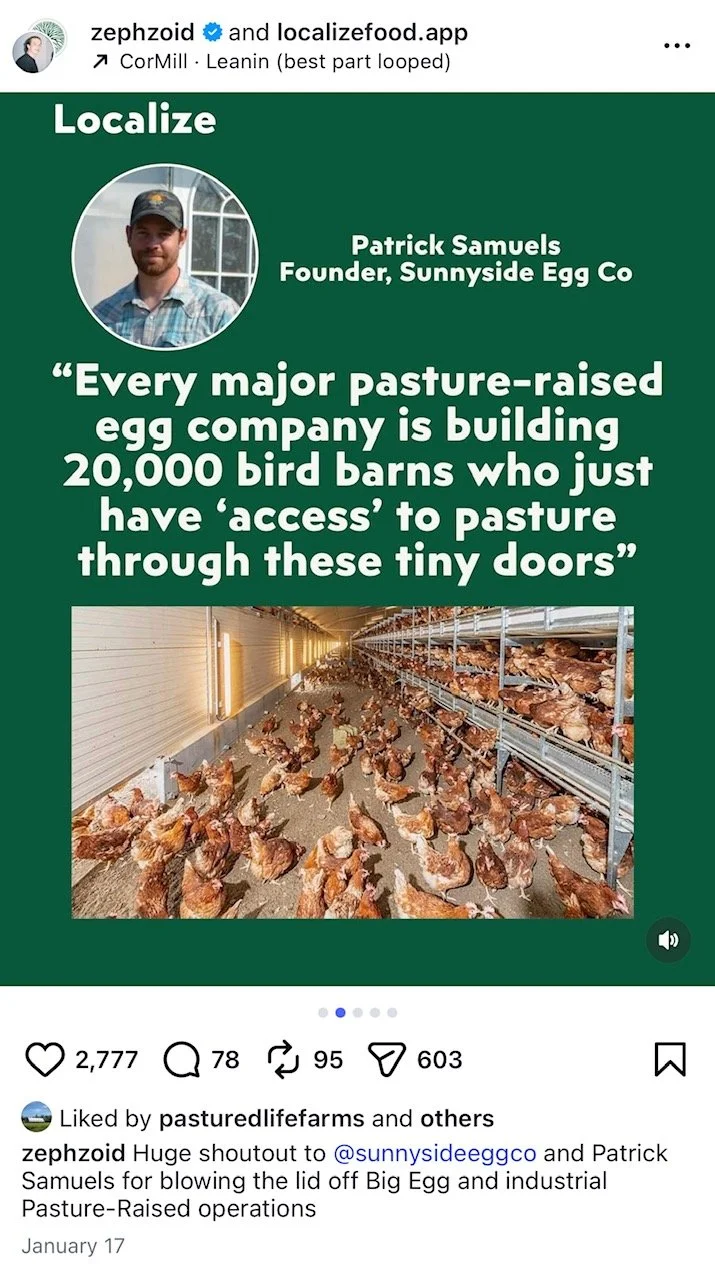
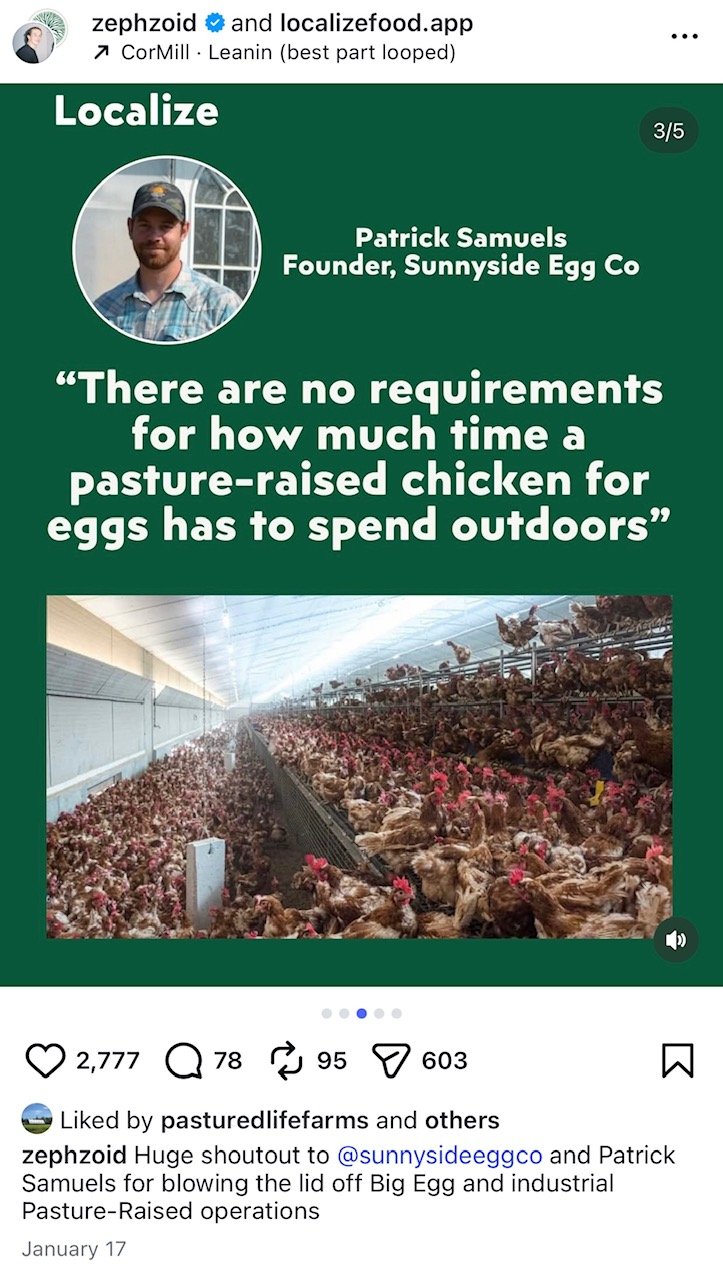
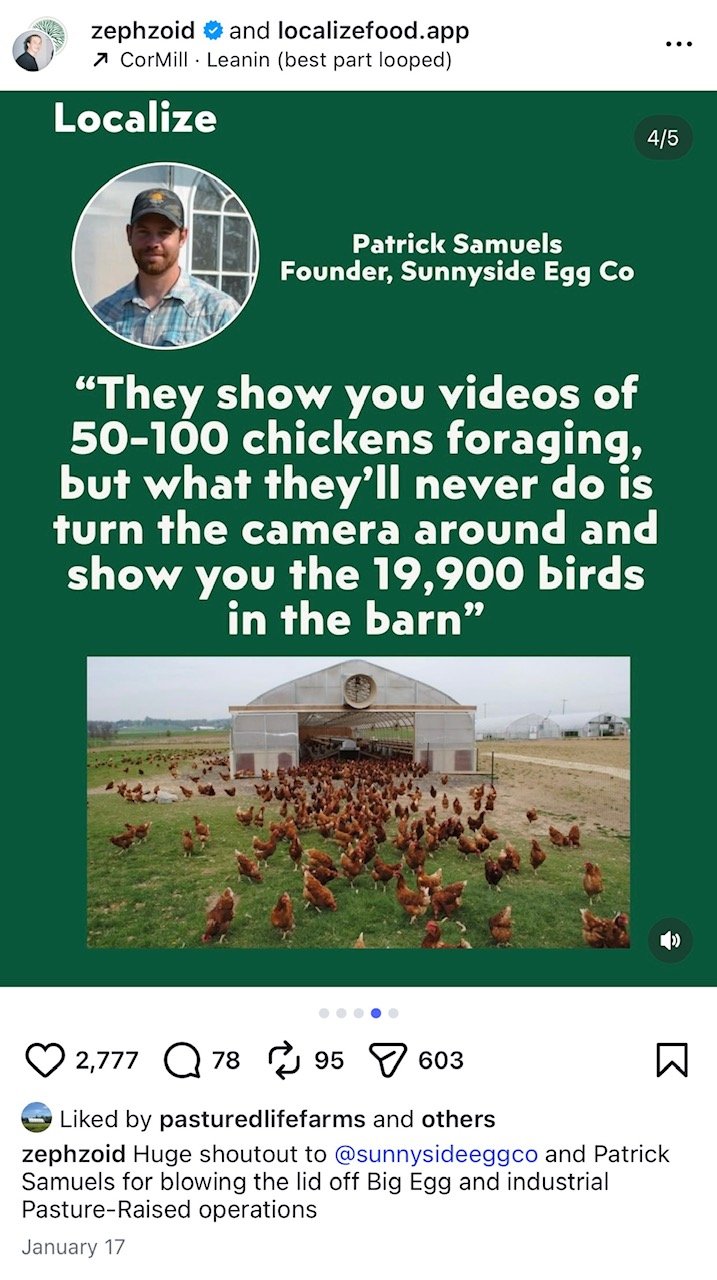
The anti-soy / anti-corn regime came down hard when data showed that the Vital Farms “pasture raised” eggs were showing high linoleic acid in their eggs, an amount higher than that of canola oil.
Many farmers try to meet the demands from the public that everything must be corn & soy free, it must be eliminated from the animals’ diets completely. However, this is throwing the “baby out with the bath water” as they say.
Without changing our rations, we know that there must be a difference in our products because those with soy allergies have eaten our products without issues.
So what’s the difference? Most commercial feed rations contain soybean meal - none that we know of actually use whole soybeans. Soybean meal is made by using synthetic chemicals to extract the protein from the soybeans. We already know that breaking down whole foods dramatically reduces the nutritional value (it’s why we started milling our own wheat berries for wheat flour, rather than using All Purpose flour).
Linoleic acid (omega 6) for soybean meal is 50-58%, while omega 6 with whole soybeans falls around 16-20%, What a world of difference! This would be akin to the difference of high fructose corn syrup vs. corn on the cob.
In addition, corn and soy cannot simply be removed from the omnivores diet (no, chickens are not vegetarian, despite what the pretty commercial carton designs say). When you remove corn and soy from the feed ration it must be replaced with something else in order to give the animal the energy and protein they need to not only survive, but to thrive and produce a healthy food source.
We cannot deprive the animals of the proteins that they require because of public outcry.
Some alternatives for soy that are suggested are peas or fish meal (10-15% linoleic acid), or sunflower seeds or linseed (40-60% linoleic acid). Here you can see that the low end of whole soybeans is almost identical to the high end of peas and fish meal. Also, remember that not every viable soy alternative is available to a farm’s region - which would force high freight costs and ultimately raise product prices.
At Farm57, we use whole roasted soybeans from local growers in our omnivores feed rations (pigs and chickens). Whole roasted soybeans is not soy, we don’t use it. Our custom blend includes whole roasted soybeans, corn, oats, calcium, alfalfa, fish meal, and Fertrell mineral mix that provides added and essential vitamins and probiotics, while excluding animal by-products, hormones, or antibiotics.
We patronize our local feed store and local growers and start with whole grains, then mill (grind) and mix our tailored ration here on our farm to provide our animals with the freshest diet possible. We also don’t want to grind everything upfront and have it spoil and lose nutrients with time, so we freshly mill our rations for each batch of meat chickens in order to retain the feed quality.
We will continue to use a holistic approach in raising our pasture raised animals for our health, the animals’ health and well-being, and our soil.
It is also important, we urge you, to take into consideration how a farmer’s animals are being raised, not only the feed they’re receiving. Both are key components and this was the start of the controversy for Vital Farms. They claim “pasture raised,” but someone utilized Google Earth in addition to Vital Farms’ 360* viewer and realized just how many hen houses they truly have. The birds aren’t raised on pasture, they are merely given access, or a chance at finding, pasture.
Transparency will always win in our books.